Lanay Natural Products: A Journey of Resilience and Innovation
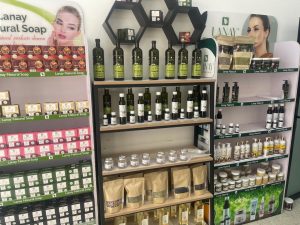
In the heart of Erbil, Iraq, a dynamic startup is making waves. Lanay Natural Products, a youth-owned enterprise, stands as a testament to the entrepreneurial spirit of its founder, Amez Abdullah. Amez is a Kurdish entrepreneur whose proactive approach to business has led her to establish one of the few female-led ventures in Iraq. Her journey is marked by courage and determination, embodying the resilience of both herself and her business.
Lanay offers a wide range of natural cosmetics, including body, hair, and skin care products meticulously crafted from nature’s raw materials. Sourced from plants, minerals, and renewable natural resources, these products undergo minimal processing to preserve their natural goodness, ensuring they have the least impact on humans, animals, and the environment. Designed to enhance and promote the health and beauty of the body, skin, and hair, Lanay’s natural cosmetics also contain nutraceutical additives like skin vitamins to further enhance their skin-nourishing properties. Free from petroleum-based ingredients, our products are a testament to our commitment to purity and sustainability.
Operating from a comprehensive 250-square-meter office space, Lanay Natural Products boasts both sales points and a well-established business front desk. This integrated setup reflects a commitment to efficiency and excellence, showcasing the dedication of Amez and her team. Within this space, a small-scale factory has begun production, thanks to strategic business alliances. With plans for expansive growth, Lanay is poised for a bright future.
Lanay’s products have undergone rigorous testing and extensive in-house market research, proving their acceptance within the consumer base. The startup has a compact team of 3-4 members, and despite its size, it has garnered significant support from investors. This support is due in part to its unique position as the first female-owned startup in Erbil with official authorization for beauty product manufacturing.
The business targets a demographic that is predominantly female (80%) and male (20%), spanning Erbil, Sulaymaniyah, and the entirety of Kurdistan. Consumers range from 15 to 50 years old, reflecting the broad appeal of Lanay’s products. Looking ahead, Amez envisions diversifying the product line to include exclusively organic offerings, further cementing Lanay’s commitment to quality and innovation.
Despite the obstacles faced by local and national businesses, Amez Abdullah’s unwavering dedication shines through. Lanay Natural Products eagerly anticipates the opportunities that lie ahead, ready to overcome challenges and continue its journey of resilience and innovation.
GroFin’s financing through the Orange Corners Innovation Fund – OCIF- a subsidy program of the Netherlands Enterprise Agency has enabled Lanay to be a more resilient company, poised to shape the future of marketing in Iraq. The funding helped in initiating the production of 50,000 bottles of shampoo monthly. and purchase of empty bottles to contain the shampoo product. The comprehensive investment plan aims to initiate monthly shampoo production, ensuring a consistent supply of high-quality natural cosmetics to meet the demands of Lanay customers in the Kurdistan region.
Ahsur Babil Sumer
Entrepreneurs Ammar Jamal and Manaf Mohamed established Ahsur Babil Sumer- a platform that aims to create an all-in-one purchasing platform for restaurants, hotels, and cafes in Iraq. Their primary objective is to establish an integrated purchasing platform catering to the needs of restaurants, hotels, and cafes within Iraq. Through this platform, these establishments could conveniently place orders for all their raw materials.
The company is driven by the intention to alleviate common challenges experienced by businesses in this sector. These issues include the inconvenience of making numerous daily calls to suppliers, slow deliveries leading to increased costs, the requirement for distinct purchase managers and accountants, absence of proper restocking mechanisms, and the absence of a marketplace for comparing prices.
In a challenging business landscape, their platform emerged as a valuable solution, enabling enterprises to operate more efficiently and make well-informed decisions regarding their product choices. Moreover, the platform connected businesses with a network of reputable suppliers, ensuring confidence in partnering with companies committed to adhering to best practices.
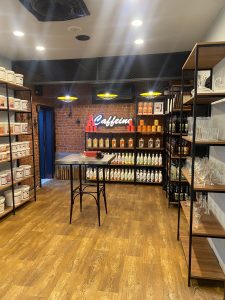
Branded as “Caffeine” which is innovative online platform aimed at simplifying the process of sourcing and procurement of Food and Beverage (F&B) supplies. The platform was established with the objective of connecting F&B businesses with reliable products and creating a seamless experience for all transactions related to F&B supplies.
Caffeine offers a comprehensive range of products to cater to the diverse requirements of the F&B industry. With over 1000 SKUs from over 80 brands, the platform offers everything from food ingredients to equipment and supplies. The platform is designed to be user-friendly, enabling F&B businesses to easily search and compare products, place orders, and manage transactions.
GroFin’s 250K loan helped the company to fulfil its business needs that include the addition of more stock and brands to its current product offerings to cater to the increasing demands of its customers as well as the company need to expand its storage capacity by adding more industrial shelves and increasing its inventory to accommodate new brands.
GroFin’s financing helped the company to manage its stock efficiently and reduce the need for frequent replenishment. Additionally, the expansion of the storage capacity enabled the company to take advantage of bulk purchases and reduce its costs, leading to an increase in its profit margins.
The critical financing received from GroFin through the Northern Iraq Investments has helped the company to remain competitive and meet the evolving demands of the market and guarantee the long-term growth and success of the business.
GroFin through NII aims to provide financial support to established businesses in Northern Iraq, helping them sustain employment opportunities and livelihoods.
Awrosoft company
Awrosoft company, a leading provider of custom software development and IT consulting services, has emerged as a true success story in the post-COVID-19 era. As the world grappled with the challenges brought by the pandemic, Awrosoft faced significant hurdles to sustain its operations and continue its innovative work. However, with the support of a crucial funding injection from GroFin, the company was able to overcome these difficulties and regain its position as a powerhouse in the IT industry.
The timely investment provided by GroFin through support from USAID proved to be instrumental in Awrosoft’s resurgence. The funding enabled the company to weather the storm of the post-COVID-19 era by sustaining its workforce, investing in technological advancements, and adapting its services to meet the changing needs of the market.
With renewed financial stability, Awrosoft continued to deliver exceptional software solutions and IT consulting services, further solidifying its reputation for excellence and innovation.
Today, Awrosoft stands as a shining example of how strategic investments and collaborative partnerships can empower companies to navigate challenging times successfully. The company’s growth trajectory since the funding injection has been remarkable, with an expanded client base, increased market share, and a stronger presence in both local and international markets.
Thanks to the support provided by Northern Iraq Investments, Awrosoft not only overcame the difficulties of the post-COVID-19 era but emerged as a stronger, more resilient organization, poised to shape the future of information technology.
GroFin through NII aims to provide financial support to established businesses in Northern Iraq, helping them sustain employment opportunities and livelihoods.

KESK – A Green Solutions Company
Power disruptions in Iraq have increased in recent years. Electricity outages are now part of daily life and affect citizens regardless of class in a country where summer temperatures can reach 48 degrees Celsius or more. Iraq’s unstable power grid is inadequate to meet the high energy demand, leaving its citizens to figure out how to cool their homes with only a few hours of electricity each day. Woman entrepreneur, Basima Abdulrahman, has found a way to address this issue by starting the first Iraqi Greentech company – KESK.
KESK synergises green power and cloud computing technologies to build alternative energy projects. It started its operation in November 2019 and provides green energy engineering services, smart solar PV products, and remote monitoring services to clients like the government, Oil & Gas companies, international organisations, as well as individual clients spanning different regions.
The idea to start KESK was born when Basima decided to come back to her hometown, Erbil in Iraq after completing her M.Sc in structural engineering in the USA.
When I was doing my Master’s degree, I realised that I have this huge passion for environment protection and climate change mitigation – that I wanted to do something related to it.
I still remember my excitement when I first heard about green buildings. This got me to study Leadership in Energy and Environmental Design (LEED) and I received the LEED accreditation from the US Green Building Council. This meant that I could certify or build new buildings to meet Green Building criteria. I wanted to do this in my home country, but nobody wanted to invest in green buildings, nobody believed in the concept. I reached the point where I realised maybe I should be the one to do it. In 2018, I established the company as a green building consulting company,” Basima relates.

It was hard enough to start a business in an unstable political environment. Green buildings were an entirely new concept for Iraqis, and a male-dominated sector – a start-up launched by a woman had its own set of challenges. However, Basima never gave up and stood up for herself, defending her idea and business model.
Being a woman, there was the perception that I wouldn’t be able to cope with the challenges of running a business in this field. Things got slightly easier when I found the first believer – the first client. It was also hard for me to bring together a team who would believe in my vision and follow my lead, especially when hiring male professionals – some of them could not stand the idea of working for a woman, and that’s unfortunate.”


When COVID-19 happened, we had to review our immediate needs. We realised that green building services are perfect for international clients but cannot be adopted immediately by the general public. Most of the requests we were getting from clients were to help them with solar energy solutions. We, therefore, pivoted to become a green solutions company and introduced solar air conditioners because we have a huge electricity problem in Iraq.”
Lack of access to trusted service providers and high-quality products are the main challenges of solar energy development in Iraq. To meet people’s needs for a 24/7 power supply, at least half of the household consumption needs to be shifted to other energy sources. And since 60% of the Iraqi household consumption goes to air conditioning units, KESK solar AC is the ideal solution for demand peak shaving.
All businesses had to close temporarily during the COVID-19 lockdowns. This translated to reductions in demand with disruptions in the supply chain. COVID-19 negatively impacted KESK’s operations; its projects were paused, and the payments that the company was expecting in 2020 and 2021 were delayed. KESK has lost out on pipeline projects due to changes in its clients’ strategies and goals. Most clients reported a lack of funding to proceed with the pipeline projects. By mid-2020, KESK started cutting operation costs by reducing salaries and expenses. KESK closed the office and reopened it again in February 2021 after securing a grant from a financial institution.
This period was frustrating. We were at the time only providing consultancy services. We didn’t have any costs related to equipment as we do now. So, we just had to look at our budget and cut down on consumption to make sure that we could survive. I, however, had to – when we were running out of juice – let some of my team members work somewhere else. It was difficult to keep the current human capital in place when we couldn’t meet salary expectations.
Once we were back on our feet, I was able to get the staff back. Now, when I look back, I realise how difficult it was, but at the time because you’re in it, you see everybody suffering, and you think that it’s normal,” Basima reminisces.

In the first quarter of 2022, KESK made record-high sales. However, the business recorded a net loss for the same period due to an increase of 10% in material costs, its shipping costs tripled, and shipment delivery time increased from 40 to 90 days. On top of it all, the lack of financing to keep the business open was an additional challenge.
In 2022, Basima approached GroFin for support to cover salaries and install new software. GroFin Iraq, through the NII COVID-19 SME Support Programme, has extended a relief loan to KESK. The NII COVID-19 SME Support Programme provides short-term business loans to existing businesses in northern Iraq to help them overcome the lingering impact of the COVID-19 pandemic and preserve jobs and livelihoods.
GroFin has provided us with much-needed capital to deploy ongoing projects and to buy equipment. Equipment is not cheap, it can cost around 50 to 60% per project. The financing will enable us to extend our runway from 5 months to about 8 months until our clients pay us,” Basima says.


Heaven Nursery
Woman entrepreneur, Eman Jassas, says she has always wanted to work in education.
My family has a history in education and a lot of my family members are educators. We have a passion for education and love it so much.
Eman is a veteran teacher with over 35 years of experience and the founder of Heaven Nursery, a nursery school in Erbil. Originally from Baghdad, Eman and her family moved to Erbil due to security concerns. Here, she worked in a school for internally displaced children, before deciding to open her own business in 2018.
“I believe many of the teaching curriculums and ways of teaching are not the best way to teach children. I realised I can start my own business and educate children in the best ways that I know,” she says about her decision to become an entrepreneur.

Heaven Nursery offers childcare and education to children aged from four months to four years and was the first nursery in Iraq to achieve international ISO certification for early childhood care and education. Eman says healthy food, clean premises, and sports and outdoor activities, are all important aspects of running a nursery school but that caring about the children who attend the school is even more important.
Caring about the child. Caring is more important than education.
Since its opening, Heaven Nursery has provided childcare services to more than 150 families. It also offers special education classes for children with mild difficulties in reading, speaking, and learning and has a licensed teacher to support autistic children. It employs nine women, including Iraqis who have fled from Mosul as well as one Syrian refugee.
Eman was planning to refurbish the school premises and expand to a second location – but COVID-19 presented an unexpected setback. The pandemic forced Heaven Nursery to close for eight months, generating no income while it continued to pay staff salaries and rent. Eman says the pandemic was a time full of unknowns as it dragged on longer than she expected.
Frustration is how I can best describe that crisis period. We lost a lot during that time. For six to nine months, we were in a very tough position.
The business remained under pressure after reopening as few parents were sending their children to nursery at that time. Earlier this year, Heaven Nursery became the first business to be granted a relief loan in the second round of Northern Iraq Investment’s (NII’s) COVID-19 SME Support Programme. The programme provides short-term business loans to existing businesses in northern Iraq to help them overcome the lingering impact of the COVID-19 pandemic and preserve jobs and livelihoods. Its first round provided loans to 25 businesses to contribute to the preservation of 413 direct jobs. The second round will extend another USD 750k in financing to qualifying businesses.

The relief loan will enable Heaven Nursery to pay staff salaries for six months and will give Eman the financing she needs to proceed with the renovation of the school premises. She also plans to use the funding to expand the camera system that provides parents with a live video feed of their children while they are at school, which is a key differentiator for her business.
I like making the kids happy and seeing the parents appreciate our work. I hope I can develop the nursery to make it the best one in town and expand to other Iraqi governorates.

Al Barada Press
“ISIS stopped our work and we lost [everything]. I had to start from scratch. It was difficult for everyone,” says Nadeem Barada, owner of Al Barada Press in Mosul.
Established in 1998, Al Barada cuts and prints nylon, plastic, and paper bags sold to restaurants, bakeries, retailers, and factories. The business suffered a setback in 2006 when sectarian tensions forced many of its trained workers from minority groups to flee. Still, Nadeem managed to rebuild his team and Al Barada survived.
Then, in 2014, ISIS invaded. The building housing Al Barada was damaged by an airstrike and an explosion from a car bomb. Nadeem says he was in the liberated side of Mosul when he received the news that his factory had been looted.
“I knew that part of the city was a dangerous place and that my factory was at risk. I rushed from the other side of the city to see what was left of my factory – and even dodged a sniper bullet on the way.”
It took him five hours to reach the factory as ongoing liberation efforts restricted movement.
“The journey was much more exhausting than I thought. They told me that the area is filled with land mines and that I was going back at my own risk,” Nadeem remembers.
When he finally reached the site, he found that the damaged building had been left all but empty by looters.
“It was a particularly tough day. I found that all the raw materials, inks, solvents, and even products belonging to customers were looted. Only the heavy motors were left.”
Nadeem began to rebuild his business and Al Barada could gradually begin to resume production in 2019. But not long after, the COVID-19 pandemic struck. As Barada’s sales are dependent on economic activity in other sectors, COVID-19 lockdowns severely affected its revenue. Nadeem was forced to use surplus funds intended to install a new and modern production line to ensure the business could survive this new crisis.
“COVID was another setback to my business. The lockdown and movement restrictions greatly affected our operations and 2020 was the worst period. We made huge losses.”
The NII COVID-19 SME Support Programme provided Al Barada with working capital to recover from the pandemic.
“We developed a new production line that enabled us to compete with neighbouring countries, manufacture high-quality products and sell to a wider market,” Nadeem says of the impact the loan made on his business.
Today, Al Barada is faring well and continues to employ five people. Abdallah has been working there since 2004 – returning to his job after the invasion by ISIS and staying employed throughout the pandemic. Abdallah supports his wife and five young children.
“Working here has been a big part of my life. I hope to continue my work and (raise) my children,” he says.

Plastic Pipe Factory
Mohammad* had already been forced to rebuild his family business from scratch once before.
After selling imported products for five years, he was proud to begin manufacturing plastic and rubber tubing on home soil in Mosul, northern Iraq. But then he lost everything when ISIS invaded.
It all came down to rubble after an airstrike from the coalition forces hit my factory and demolished the whole building as ISIS was using it to launch attacks and store their weapons at the time.
Mohammad managed to revive the business after the liberation of Mosul in 2017 and says he hoped for a new beginning.
It is a family business. My four brothers and I have been working in the factory for about eight years. It gives us and our families a much-needed livelihood. It was also important for us to maintain the family name, as our reputation is a very important part of our business.
In 2020, they were dealt another unexpected blow when COVID-19 appeared in Iraq. COVID-19 restrictions forced Mohammad and his brothers to shut the factory down for nearly three months.
It was an unfortunate period, and my business made a lot of losses. I feared that this will lead me to close it and I worried that I won’t be able to support my family anymore.
Like many other SMEs in Iraq, Mohammad’s business suffered severe revenue losses due to COVID-19 lockdown measures. A series of surveys conducted among nearly 900 Iraqi SMEs by the International Organization for Migration (IOM), the Food and Agriculture Organization (FAO), and the International Trade Center (ITC) highlights the severe impact forced shutdowns had on small businesses across all sectors. Respondents reported average losses of 67% in revenue between February and June 2020. Revenues did show partial recovery later in the year but were still 23% lower in December 2020 than pre-pandemic levels.

Mohammad’s business was one of the 23 SMEs to receive a relief loan through NII’s COVID-19 SME Support Programme. The programme, supported by USAID through a gift from the American people, provided Mohammed with the funding he needed to pay salaries and purchase raw materials to resume operations. His factory uses recycled plastic as wells as plastic nurdles sourced from both local and international suppliers.
The funding I received helped me to sustain my business and enhanced my cash flow.
The COVID-19 crisis also deeply impacted the ability of Iraqi SMEs’ capacity to retain employees. According to the abovementioned survey, the average reduction in employment from February to June was 27%. Although the opening up of the economy allowed surveyed SMEs to bring employees back after June, employment has not yet reached pre-COVID-19 levels. Thanks to the NII relief loan, Mohammad’s business continues to employ 14 people.
Khalil*, who handles the administrative side of the business, says the pandemic has been stressful for him and his family. He was nervous about losing his job like others in his community.
I was happy to keep my job as the factory has become a second home for me. I am also sustaining the livelihood of the [other] people working in the factory as well.
*For the security of our clients, we use fictitious names.
Café A1
Mohammed T. knew that one day the call would come. But when a neighbour phoned to tell him that ISIS had destroyed his restaurant in the northern Iraqi city of Mosul, he was still devastated.
The American style dishes that helped to make Café A1 popular among students and young professionals, also made it a likely target for destruction when ISIS seized control of Mosul in June 2014. Mohammed and his family were among the approximately 500,000 people who fled the city and district around it within only two weeks.
“Right after ISIS entered the city, I knew I had no choice but to flee. It was a difficult day,” he recalls.
Although he lost everything he had invested in his business, Mohammed says his love for his job and the needs of his community compelled him to return to Mosul to rebuild Café A1. But last year, COVID-19 cast the future of the business in doubt again. Lockdown measures forced Café A1 to stay closed from mid-March until June 2020 and Mohammed feared his business would have to shut down for good.
My biggest fear was I would not be able to sustain my family financially.

A relief loan from the NII’s COVID-19 SME Support Programme helped to cover Café A1’s working capital needs, rent, and salaries.
The loan helped my business survive,
he says.
Although evening curfews are still affecting restaurants in Mosul, Mohammed says the situation is much better now and Café A1 can continue to employ nine people, including three women.
Temira S. has been working as a receptionist at the restaurant for three years. She says the pandemic had a tremendous impact on her community and the job market in general. Temira’s job allows her to support her parents and three sisters, and she is grateful that she was able to stay employed despite the pandemic.
It means a lot to me. I stayed at home for two months and thought my career had ended.
A survey by humanitarian organisation REACH, conducted in the Markaz Mosul district in March 2021, found that the most commonly reported primary need in the community was access to livelihoods due to the lack of public and private sector job opportunities. It was also identified as the most needed intervention to encourage further returns of the over 251,000 people the United Nations say remain displaced from the area.
This means that in addition to reconstructing the city’s infrastructure and buildings; revitalising and sustaining small businesses like Café A1 will be just as crucial to rebuilding Mosul and the lives of its people.

Hizheer Restaurant
After being forced to flee their home in the northern Iraqi city of Sinjar when ISIS invaded, Ahmed S. says his family considered leaving the country for good.
Ahmed is Yazidi, a minority group that historically inhabited Sinjar and violently persecuted when ISIS seized control of the region in 2014. In May 2021, an investigation by the United Nations concluded that the violence ISIS inflicted on Yazidis amounted to genocide and included war crimes.
Ahmed says it is impossible to fully convey the impact that the invasion by ISIS had on Yazidis. “No pen or thoughts or words can express it fully. Those who were not killed or kidnapped or raped were deserted and displaced. And those who were not raped physically were raped psychologically.”
But instead of leaving, Ahmed returned to Sinjar in 2019 to open Hizheer Restaurant. “I thought of bringing back life to my community. The biggest challenge I faced was that I spent a lot of money in an area where only 5% of the population had returned. But by opening the restaurant, I sent a clear message that the area will recover.”
Hizheer soon became a popular venue for NGOs working to rebuild Sinjar to host workshops and conferences. The restaurant helped to signal what seemed to be a return to normal life in Sinjar, especially by offering buffet meals and a stage for live music over weekends. Then, nine months after Hizheer opened, COVID-19 put all of that to an abrupt end.

Ahmed says the pandemic caused serious damage to his business as regulations forced it to remain closed from mid-April to September 2020. “It was a bad feeling. I had the constant fear that Sinjar would not be what it was again and that its people would not return,” he says of this difficult time.
GroFin’s Northern Iraq Investments (NII), with the support of USAID through a gift from the American people, has extended $1.5 million in financing to help small businesses in northern Iraq survive the COVID-19 pandemic. Hizheer received a support loan through the programme, allowing the business to pay off the debts it accumulated during lockdown so it could reopen.

As a result, the restaurant continues to employ 13 people. Ahmed S., Hizheer’s general manager, says many people in Sinjar lost their jobs and livelihoods because of the pandemic. “It is very important for me to preserve my work and try to enlarge and expand it after this crisis. My hope for the future is that most of the displaced Yazidis return to Sinjar.”
According to the United Nations almost 200,000 people remain internally displaced from the district surrounding Sinjar. Debris in certain areas and a lack of infrastructure and services like healthcare, electricity, and water & sanitation continue to keep many former residents from returning. Small businesses like Hizheer can play a crucial role in rebuilding the city and its economy by providing jobs and services to ultimately allow more people to go home.

Luma Style Salon
The severe impact of the COVID-19 pandemic on Iraqi SMEs has not only hit overall employment in the country hard – it is also worsening the gender gap in employment.
A study by the International Organization for Migration (IOM), the Food and Agriculture Organization (FAO), and the International Trade Center (ITC) among 900 SMEs across Iraq shows the employment gender gap exhibited at these businesses has widened by a massive 30 percentage points. In February, the ratio of women to men employed averaged 1 to 13. But when the research was conducted at the end of June, this had increased to 1 to 17. The SMEs surveyed also reported a reduction of 27% in full-time employment levels.
Luma Style, a high-end beauty and hair salon in the city of Erbil in northern Iraq, is a woman-owned business and one of the SMEs employing women which were forced to cut its staff numbers due to the impact of the pandemic. The salon – which offers a range of beauty products and treatments like manicures, pedicures, facials, massages, and waxing – was forced to closed in mid-March 2020 and COVID-19 measures aimed at the beauty industry meant it could only reopen near the end of May. Around the world, industries like beauty, hospitality, education, and healthcare – which tend to employ a higher number of women – have been disproportionately affected by the pandemic.

Luma K., the owner of Luma Style, is Christian – a minority group in northern Iraq – and originally from Karemlesh. The residents of Karemlesh were forced to flee the town when ISIS seized control of it in 2014. Luma started her business in 2017 but says she feared she would be forced to close it permanently when the lockdown measures left it unable to generate any income. Luma’s turnover is likely to be 40% lower this year than in 2019. “Costs accumulated put us under immense pressure at a time when the business did not make any profit. I felt like I would have to close my business at some point,” she says.
Luma was forced to permanently retrench three of her staff members and cut salary payments in half. To make matters worse, she and her family were infected by COVID-19. Thanks to a relief loan from the NII’s COVID-19 SME Support Programme, Luma now believes her business can recover and should be able to breakeven at the end of 2020. “The loan will help me to cover rent, salaries and the cost of raw materials to enable me to continue my business and avert risks at this critical time. I hope to grow my business and make it sustainable in the long run.”
This funding means that Luma Style can continue to employ nine people – eight of whom are women. Luma’s sister, Lobna K., works as a hairdresser at the salon. She financially supports her husband and two young children. She says she hopes to keep working for her sister. “I depend on this job for my livelihood and that of my family.”


